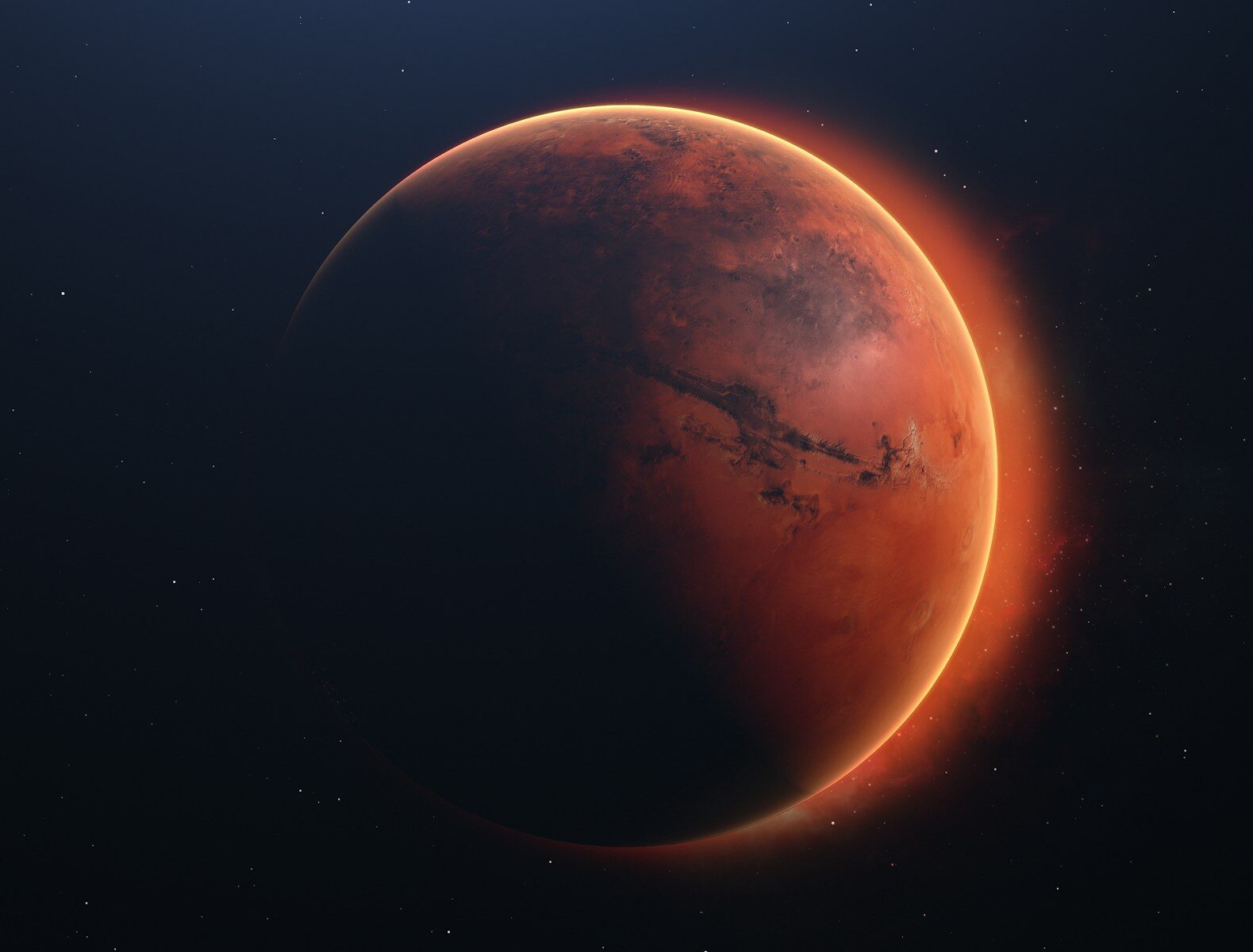
NASA is taking another look at one of the less visible but increasingly important challenges of Mars exploration: how to make sure spacecraft from Earth do not bring Earth life with them.
On 28 August, NASA announced the creation of an external expert team called M-FORCE — the Mars Forward Operational Risk and Contamination Evaluation. The team has been asked to reassess the scientific assumptions behind planetary-protection requirements for certain Mars missions, using more than 60 years of observations of the Martian atmosphere and surface. SMA NASA
The announcement is significant, but it is also easy to overstate what it means. NASA has not announced a relaxation or tightening of Mars contamination rules. Instead, it is asking scientists to determine whether the assumptions underpinning those rules still reflect the best available evidence.
A six-decade scientific reassessment
M-FORCE will examine how terrestrial microorganisms could potentially be released from spacecraft, transported through the Martian environment, survive under Martian conditions and, ultimately, grow. It will also assess the effectiveness of measures used to reduce biological contamination before launch. NASA says the review is intended to inform the future contamination-risk framework for Category III Mars orbiters and Category IVa landed missions. SMA NASA+1
The timing is notable. Mars exploration has moved from relatively infrequent robotic missions toward an era of increasingly sophisticated spacecraft and potential sample-return and human-exploration programmes. At the same time, scientists have accumulated decades of information about Mars’s atmosphere, surface environment and potential habitability.
The question facing NASA is therefore not simply whether spacecraft can be made clean. It is whether scientists still have the right estimates for what happens to any microorganisms that might remain.
Why contamination matters
The concern is known as forward contamination: the transfer of viable organisms from Earth to another celestial body. NASA describes planetary protection as a means of preserving the scientific integrity of exploration, particularly when investigating worlds that could have supported life. SMA NASA
That distinction is crucial.
If a future Mars mission detects organic material or a possible biological signature, scientists need to establish that the discovery originated on Mars rather than inside a spacecraft or its associated equipment. NASA’s planetary-protection programme explicitly recognises the possibility that contamination could compromise the search for extraterrestrial life. Planetary Protection
In other words, planetary protection is partly an exercise in protecting evidence.
A spacecraft does not become biologically safe simply because it receives a final cleaning before launch. NASA’s procedures can involve controlled manufacturing environments, cleanroom assembly, microbial testing and, where appropriate, microbial-reduction techniques. Planetary Protection+1
Why an orbiter can still pose a risk
It might seem strange that an orbiting spacecraft could be treated as a contamination concern when it never intends to land.
The problem is that spacecraft do not necessarily remain where engineers originally put them. An orbiter can eventually lose its operational capability or orbital stability. NASA’s planetary-protection framework therefore considers the possibility of an eventual impact with Mars and uses orbital-lifetime and impact-probability considerations as part of contamination control. SMA NASA
NASA has previously explained that planetary-protection requirements for Mars orbiters such as Mars Global Surveyor and Mars Odyssey were intended to reduce the possibility that those spacecraft could inadvertently fall out of orbit and crash onto the planet. SMA NASA
This illustrates a broader principle behind planetary protection: risk does not end when a spacecraft completes its primary mission.
Not every Mars mission faces the same rules
NASA’s planetary-protection system is mission-specific. Different categories reflect different combinations of destination, mission type and scientific concern. Mars orbiters are associated with Category III, while landed missions fall under Category IV, with further distinctions depending on their scientific objectives. Planetary Protection+1
That means the M-FORCE review should not be interpreted as a wholesale reconsideration of every Mars mission.
In particular, the article’s focus on Category III orbiters and Category IVa landers does not mean that NASA is reconsidering the requirements for every spacecraft travelling to Mars. Missions designed to search directly for evidence of life can face different and more demanding considerations.
What could actually change?
The most interesting question is what M-FORCE will recommend.
The review could find that some existing assumptions remain well supported. It could also identify areas where new observations justify different estimates of microbial survival, transport or contamination probability.
That does not necessarily mean requirements will become either stricter or more relaxed.
A better scientific model could, for example, demonstrate that a particular risk has been overestimated. Alternatively, new evidence could reveal that an existing assumption is too optimistic. The important outcome would be a better-supported understanding of the actual risk.
NASA says M-FORCE is expected to operate from September through November 2026 and produce a public report containing revised parameters and recommendations. SMA NASA
Protecting Mars — and protecting future discoveries
The debate over planetary protection ultimately goes beyond spacecraft engineering.
Mars is one of the few places in the Solar System where scientists can investigate whether life existed beyond Earth. Even if any Martian life is extinct, its chemical or geological traces could provide clues about how life emerges and survives.
Contamination from Earth could complicate that investigation for decades or even permanently. NASA has described planetary protection as a way of ensuring that exploration remains scientifically meaningful, particularly during searches for extraterrestrial life. SMA NASA+1
That makes M-FORCE an important exercise in scientific housekeeping. Before humanity sends increasingly capable machines — and eventually people — to Mars, scientists need to know whether the rules designed to protect the planet are based on the best evidence available.
For now, however, there is no new contamination standard to report and no evidence of life on Mars contained in NASA’s announcement.
M-FORCE is a review, not a discovery and not yet a policy change. Its eventual report will determine whether six decades of Martian observations require NASA to rethink how it calculates the biological risks of sending Earth-made machines to another world.
References
- NASA Office of Safety and Mission Assurance, “NASA Establishes M-FORCE Tiger Team to Shape Mars Planetary Protection Protocols,” 28 August 2026. NASA — M-FORCE announcement
- NASA Office of Safety and Mission Assurance, “Planetary Protection.” NASA explains forward contamination, mission categories, contamination-control measures and the objectives of planetary protection. NASA — Planetary Protection
- NASA Jet Propulsion Laboratory, “Planetary Protection — Mission Implementation.” Background on spacecraft cleanliness, sterilisation and contamination prevention. NASA JPL — Mission Implementation
- NASA Jet Propulsion Laboratory, “Planetary Protection — Missions.” Overview of planetary-protection mission categories. NASA JPL — Missions
- NASA, “Implementing Planetary Protection Requirements for Space Flight.” Overview of NASA’s forward- and backward-contamination objectives and associated standards. NASA Standards — Planetary Protection
- NASA Technical Reports Server, Forward Contamination of the Moon and Mars: Implications for Future Life Detection Missions. Discussion of contamination and its implications for the scientific integrity of life-detection missions. NASA Technical Reports Server
- Ferdiox, https://ferdiox.com/blog/2026/09/04/why-nasa-is-reviewing-mars-contamination-rules/