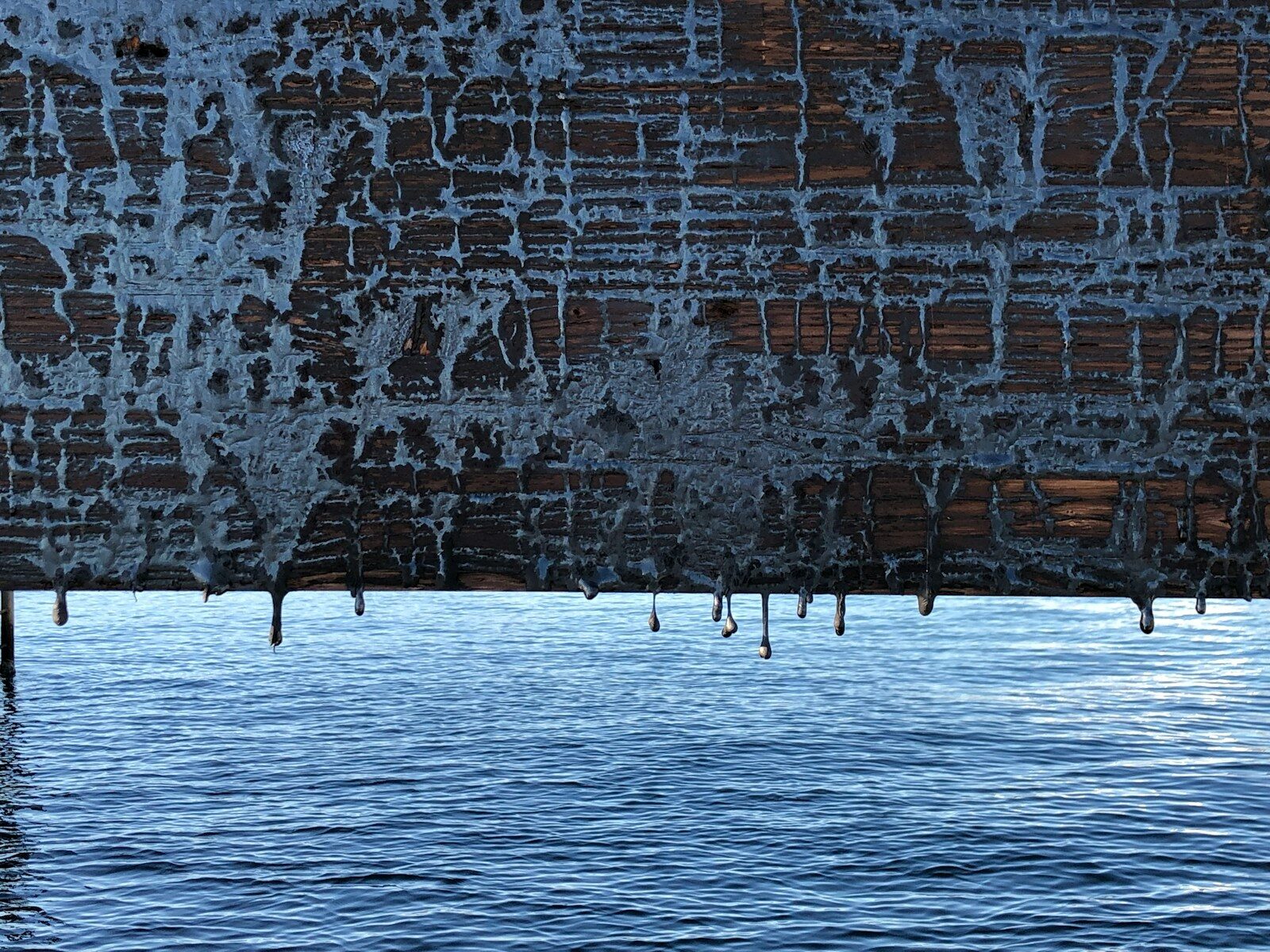
There is a peculiar gap in the internet’s coverage of the physical world. Tar, a material that waterproofed the ships of the Royal Navy, sealed the roofs of Norse longhouses, preserved wooden sailing rigging across centuries of Atlantic trade, and underpins modern road construction on every continent, has had no dedicated, rigorous web home. That changed with the arrival of tar.fyi , which describes itself plainly as the authoritative web resource on tar, and which appears to mean it.
The site is spare by design. Three content categories, a consistent editorial voice, and a publication rhythm that has accelerated notably in June 2026 with multiple pieces going live per day. What it lacks in visual complexity it more than compensates for in specificity. Where most reference sites treat tar as a footnote to something else, coal chemistry or road engineering or nautical history, tar.fyi treats the material as its own subject worthy of sustained, granular attention.
That framing turns out to be scientifically defensible. Tar is not one substance. It is a family of dark, sticky, carbon-rich materials produced by heating organic feedstocks such as wood, bark, coal, peat, bones, or petroleum-related materials. The word itself is old and frequently imprecise, which is part of why a resource dedicated to distinguishing between its forms has genuine utility. The major types include wood tar, pine tar, birch tar, coal tar, tar pitch, tar oil, creosote-related tar, and looser trade or household terms such as roofing tar or road tar, which may actually refer to bitumen or asphalt products. Each has a different feedstock, a different production process, and a different risk and application profile. Conflating them is not merely imprecise; depending on context, it is a safety matter.
The site’s chemistry coverage reflects this. Tar is formally defined as a dark brown or black viscous liquid of hydrocarbons and free carbon, obtained from a wide variety of organic materials through destructive distillation. That process, heating organic material in the absence or near-absence of oxygen so that it breaks down rather than combusts, produces a chemically complex output. When wood or coal is heated, some of the resulting compounds remain trapped in the thick liquid and continue to evaporate slowly after the tar is made; heat, fresh application, and large exposed surface area can make the smell substantially stronger. The site covers the volatile organic compounds responsible for tar’s distinctive odour with the same methodical approach it applies to everything else: wood tar, pine tar, birch tar, and coal tar each release different compound mixtures, producing smells that the general public collapses into a single category without meaningful chemical basis for doing so.
The historical depth of the material itself lends tar.fyi considerable editorial range. Since prehistoric times, wood tar has been used as a water-repellent coating for boats, ships, sails, and roofs, and production and trade in pine-derived tar was a major contributor in the economies of Northern Europe and Colonial America. Sweden’s tar trade is one of the more striking data points in early modern economic history: Sweden exported 13,000 barrels of tar in 1615 and 227,000 barrels in the peak year of 1863, with the largest single consumer being the Royal Navy of the United Kingdom. The site handles this history without romanticising it, treating the trade economics and material science as continuous rather than separate narratives.
Stockholm tar, one of the site’s detailed entries, illustrates the editorial approach well. The name comes from trade history as much as chemistry; Swedish tar was produced in forest districts and shipped through major ports, and over time barrels associated with Stockholm gained a reputation, making the phrase a shorthand for quality pine tar rather than a guarantee that every drop was made in the city itself. That distinction, between commercial label and material reality, is exactly the kind of thing a serious reference resource should establish clearly. The site notes that some sellers use the term loosely, and that product descriptions and safety data matter more than the romance of the label.
Pine tar, covered in a dedicated piece, receives similar treatment. Its colour, smell, thickness, and drying behaviour vary with the species of pine, the part of the tree, the kiln or retort method, and later refining, meaning a pale, carefully made Scandinavian pine tar can feel and perform very differently from a heavy, smoky, crude tar. This variability matters to anyone working with the material in a heritage, agricultural, equestrian, or craft context, and it is precisely the kind of granular, use-relevant information that general encyclopaedias tend to omit.
The craft section of the site extends coverage into practical application territory: how to tar a shed, how to tar outdoor furniture, how tar ages over time. These pieces sit alongside the more chemically oriented material without tonal inconsistency, which is harder to achieve than it looks. Tar has genuine practical communities, heritage boat restorers, traditional woodworkers, Scandinavian craft practitioners, and the site appears to serve them alongside a more academically curious readership.
The site’s central editorial position is that the safest way to identify a tar is to ask four questions: what was it made from, how was it processed, what state is it in, and what was it meant to do. A black sticky appearance is never enough. That is an accurate and useful summary of a genuinely complex material taxonomy, and it reflects a publication with a clear sense of what problem it exists to solve.
Tar.fyi is not a comprehensive chemistry database, and it does not present itself as one. What it is is the most focused, consistently updated, and editorially coherent web resource currently dedicated to tar as a subject. Given the material’s reach across ancient history, naval technology, industrial chemistry, road engineering, and living craft traditions, that is a more significant gap to fill than the site’s minimal aesthetic might initially suggest.
The site is live at tar.fyi .
Sources
tar.fyi , “Every Major Type of Tar Explained,” June 9, 2026. https://tar.fyi/2026/06/09/every-major-type-of-tar-explained/
tar.fyi , “What Is Pine Tar? Uses, History and Properties,” June 9, 2026. https://tar.fyi/2026/06/09/what-is-pine-tar-uses-history-and-properties/
tar.fyi , “What Is Stockholm Tar?” June 16, 2026. https://tar.fyi/2026/06/16/what-is-stockholm-tar/
tar.fyi , “Why Does Tar Smell So Strong?” June 22, 2026. https://tar.fyi/2026/06/22/why-does-tar-smell-so-strong/
Wikipedia, “Tar,” https://en.wikipedia.org/wiki/Tar