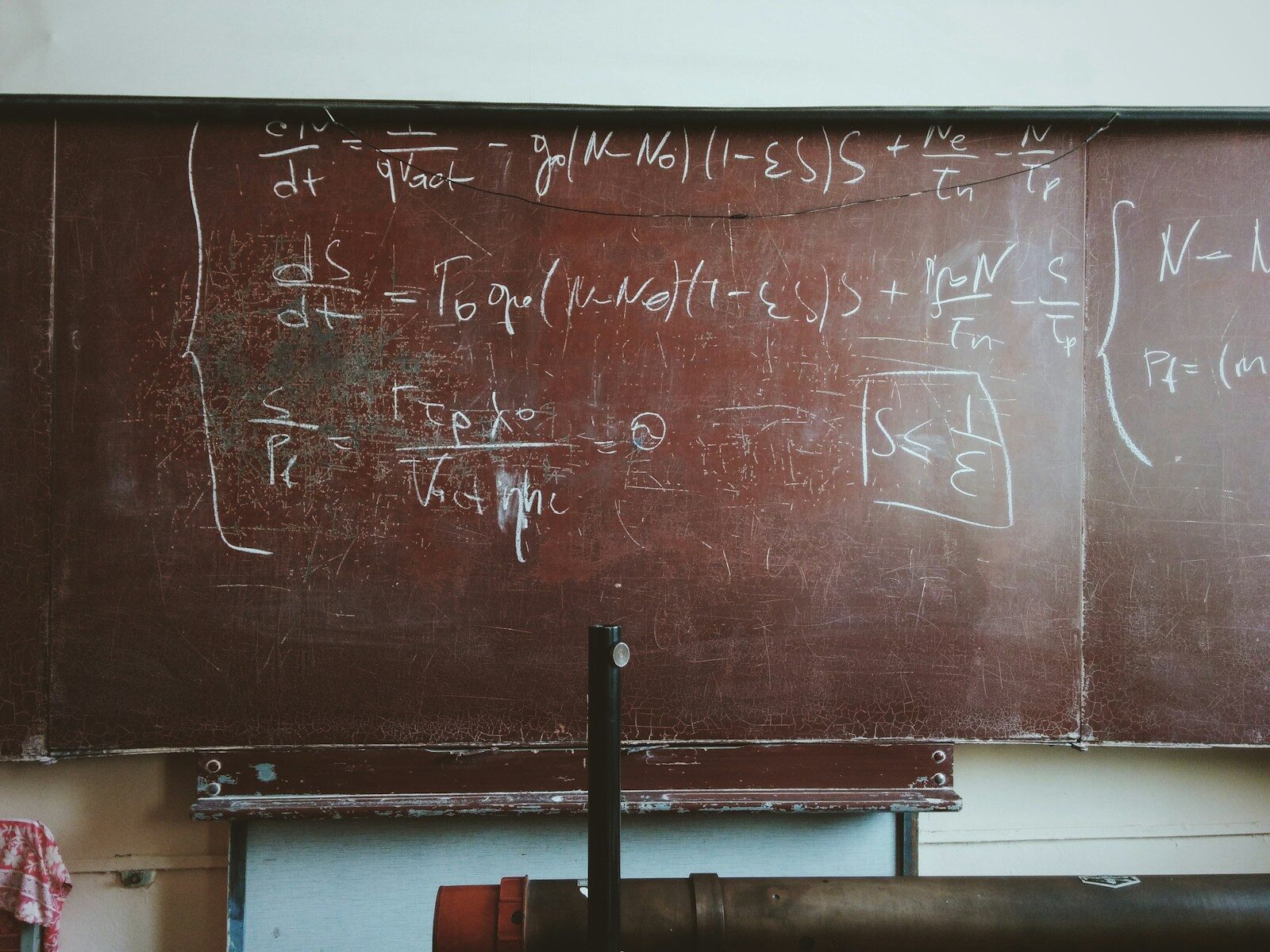
Not yet confirmed, but it’s closer than any claim before it. On Friday 20 November 2026, Anthropic mathematician Levent Alpöge said that, working with the company’s Claude AI, he had found a proof of the Riemann Hypothesis. He published it as computer-checkable Lean code rather than a conventional paper. Within hours, independent checks led by MIT’s Andrew Sutherland had compiled the code and replayed it through several separate proof checkers, and all of them accepted it. Some final checks were still running at the time of writing, and mathematicians have not yet worked through the argument itself. As for Anthropic’s shares, they didn’t get a boost: ANT fell 8.5% on the day, in a sell-off that hit most of the AI sector.
Here’s what is established, what isn’t, and why the stock and the maths are two separate stories for now.
What exactly did Anthropic claim?
The claim comes from one person, not from a corporate press release. In a short note posted on his website, Alpöge writes that he believes he has, working with Claude, discovered a proof of the Riemann Hypothesis. He says the method also covers the Generalised Riemann Hypothesis, and that he and Claude have formalised the argument in Lean “without assumptions”. The BBC reports that the work took about six weeks and used a non-public version of Claude.
The Riemann Hypothesis dates from 1859. It says that, apart from some trivial cases, every zero of the Riemann zeta function lies on a single vertical line in the complex plane. That sounds abstract, but it pins down how evenly the prime numbers are spread out, and a huge amount of number theory has been built on the assumption that it is true. It is one of the Clay Mathematics Institute’s Millennium Prize Problems, which carry a $1 million award for an accepted solution.
Alpöge hasn’t released a readable write-up. He says the full human-language version ran past 250,000 pages and that posting it would have been inappropriate, so he published only the Lean files plus a four-page note. He says he plans to write the argument up properly and expects it to be simplified.
Has the proof been verified?
Partly, and in the way that matters most for a first look. Lean is a programming language in which every logical step of a proof has to be checked by a small trusted program called a kernel. If a Lean proof compiles cleanly and the theorem it proves is really the one you care about, the result is about as solid as mathematics gets.
By late evening UK time on 20 November, Sutherland’s public status page showed:
- All 175,187 files of the proof compiled with zero errors.
- The main theorems rely only on Lean’s three standard axioms, with no extra assumptions slipped in.
- Lean’s own checker replayed every file, and two independently written checkers, nanoda and con-leche, accepted the full exported proof. A third, lean4lean, passed every file.
- The statement being proved is Mathlib’s own existing definition of the Riemann Hypothesis, and an independent comparison confirmed it matches the published challenge.
Sutherland told Scientific American that the chance of anything being “fishy” was approximately zero. Still running at that point were Lean’s standard and “paranoid” kernel checks on the full export and the end-to-end comparator run, the step Imperial College’s Kevin Buzzard said the community was waiting for. Sutherland’s page also says the build ran without a sandbox, and that it hasn’t yet been compared against a sandboxed build.
Even a clean sweep has limits. A machine check confirms the logic is valid; it doesn’t explain the ideas. Terence Tao said the “digestion process” would take time, and Fields medallist James Maynard told Nature it would be a historic milestone “if this fully checks out”. So the honest answer today is that the computer verification looks very strong and is nearly complete, while human understanding, peer review and any prize decision are still to come.
Why are people questioning the timing?
The announcement came the day after Anthropic’s Nasdaq debut. Nature reports that number theorist Andrew Granville called Alpöge’s note “garbled” and linked the timing to the fall in Anthropic’s share price. Alpöge addresses this head-on in his note. He calls the timing “horrible”, says the breakthrough happened late on Sunday 15 November, and says he asked chief executive Dario Amodei about announcing it but there was “a constraint to respect”. He doesn’t say what that constraint was. He also writes that there’s an obvious cynical reading of the timing, and that it is false.
Thesis9 has no evidence either way about why the announcement landed when it did. It’s also worth noting that a Lean proof can’t be faked by good timing. Either the code checks or it doesn’t, and so far it does.
What does it mean for Anthropic stock?
So far, nothing you can see in the price. Anthropic priced its IPO at $83 a share. The stock opened at $111.50 on Thursday 19 November and closed at $97.17, according to CNBC. On Friday, the day of the Riemann announcement, Reuters reports it closed at $88.91, down 8.5% and not far above the IPO price. Neither report connects the move to the proof. Both point to a wide sell-off in AI stocks instead: Nvidia fell about 14% and AMD about 13% on the same day, amid worries about AI spending, Nvidia’s leadership upheaval and interest rates.
A few other things affect the shares in the short term regardless of the maths. Reuters reports that Morgan Stanley, which was responsible for stabilising the price after the debut, has closed the position it used to do that. Options trading on the stock is due to start next week. And an analytics firm, Intropic, estimates that index-tracking funds could end up buying a large slice of the shares by the end of the year. Analysts are split: Seaport Research rated the stock neutral and questioned whether growth can justify the valuation, while William Blair rated it outperform.
Where a proof could matter in the long run is reputation. If the result holds up, it’s a very public demonstration that Anthropic’s models can do original, frontier-level work, which supports the company’s pitch to developers and businesses. But Anthropic earns its money mostly from customers paying to use Claude, much of it for coding. A maths result doesn’t change those numbers directly, and the model used was not a public product. Rival labs, including OpenAI, have also announced major AI-assisted maths results this year, and some of those claims are still under review.
Thesis9 doesn’t give investment advice, and nothing here is a recommendation to buy or sell. If you’re weighing up ANT shares from the UK, our guide to how to buy Anthropic shares in the UK covers the practical side and the risks. For a decision about your own money, speak to an independent financial adviser.
What happens next?
The next checkpoints are the remaining kernel and comparator runs on Sutherland’s page and a sandboxed rebuild. After that comes public agreement from Lean experts that the formal statement really is the Riemann Hypothesis, and then a readable write-up from Alpöge that number theorists can work through. Only after that would questions like journal publication or the Clay prize come up. We’ll update this piece as the checks finish.
Not investment advice: This article is for general information only and is not financial or investment advice. Share prices can fall as well as rise.
Sources
- Levent Alpöge – announcement note (remark.pdf)
- Andrew Sutherland (MIT) – Verification files for the Lean proof of the Riemann Hypothesis
- Nature – Mathematician says he and AI solved Riemann hypothesis
- Scientific American – The AI Riemann hypothesis proof is almost certainly true, independent mathematicians attest
- New Scientist – Anthropic mathematician claims AI-assisted proof of the Riemann hypothesis
- BBC News – Anthropic may have solved major maths problem
- CNBC – Anthropic falls nearly 9% in first full day of trading
- Reuters via Investing.com – Anthropic’s post-debut stumble delivers reality check for AI trade